Blog

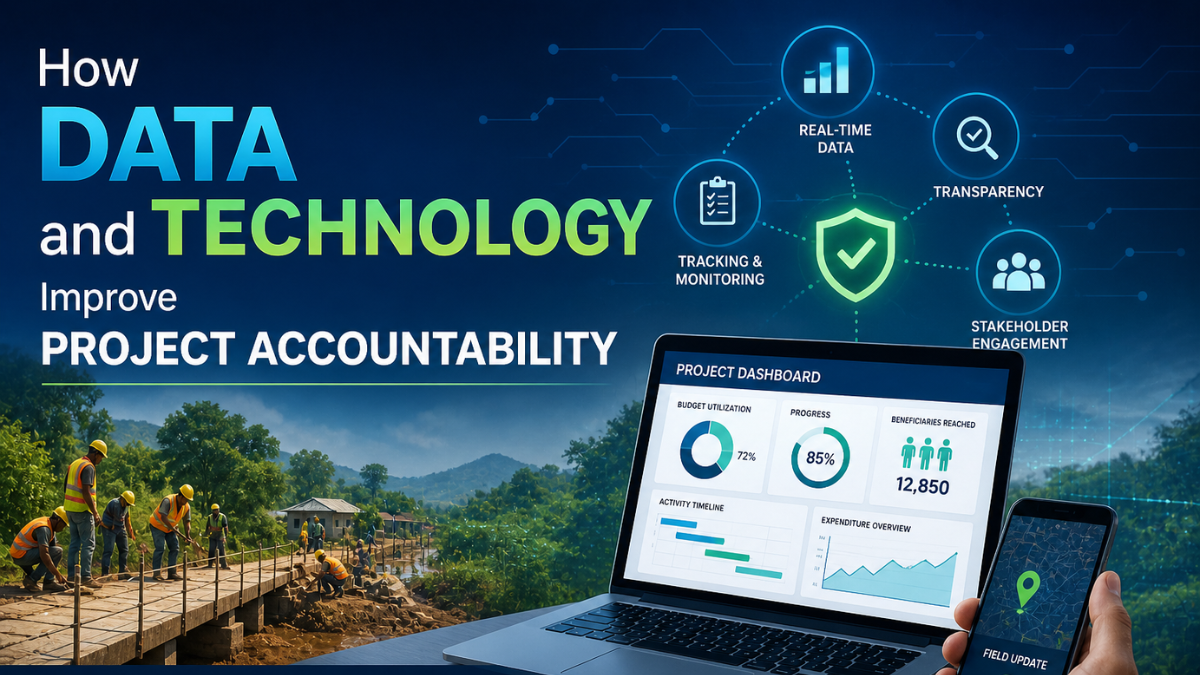
  • How Data and Technology Improve Project Accountability

    How Data and Technology Improve Project Accountability

    I used to think that accountability in projects was about writing reports. You finish something you write it down you submit it. That is how progress gets recorded.

    Over time I started to feel that this idea was not entirely right.

    Because reports do not always show the picture of what happened. They give you a summary they highlight a things and sometimes they make things sound simpler than they really are. What reports do not always do is show you how things actually happened in time.

    That is where data and technology come in. They have changed things. Not by replacing accountability. Instead they have changed how we understand accountability and how we see it.

    What Accountability Really Means in Practice

    Accountability is not about proving that you did something. It is about showing how you did it why you made decisions and what happened as a result. It is about being clear not about finishing things.

    In project work in areas like development, social impact or big operations it can be hard to be clear without the right tools. That is where data starts to matter.

    Turning Activity Into Visible Data

    Almost everything you do in a project creates some kind of data. When you update something in the field when you make a transaction when you change a timeline or when you count how many people are participating. All these things are part of a bigger picture. The problem has always been. Organizing this data in a way that makes sense.

    Technology makes this process easier. Mobile apps, cloud platforms and digital systems let teams record information as things happen. Of relying on memory or waiting until later to report something data is captured in real time.

    Once it is recorded it becomes easier to see what actually happened.

    Real-Time Monitoring of Delayed Reporting

    There is a big difference between knowing something after it is finished and seeing it while it is still happening.

    Traditional reporting often takes time. By the time a report is reviewed the situation may have already changed.

    With real-time monitoring tools updates can be shared away. Project managers can track progress find problems early and change plans when needed. It does not remove all uncertainty. It reduces the time between taking action and being aware of what is happening.

    Making Flows More Transparent

    Money is a very sensitive part of any project. Where it goes how it is used and whether it is used for what it was meant for. These are questions that come up a lot.

    Digital financial systems help make things clearer. Transactions can be recorded, categorized and tracked over time. You can see patterns. Find irregularities more quickly.

    It is not about controlling the money. It is about understanding how resources are being used.

    Using Data to Support Better Decisions

    Accountability is not about looking back at what happened. It also helps decide what to do

    When data is available and organized it becomes a tool for making decisions. What is working? What is not working? Where should resources be focused?

    Of just guessing teams can use real information to guide their choices. It does not make decisions easier. It makes them more informed.

    Strengthening Trust With Stakeholders

    One of the obvious results of better accountability is trust. When stakeholders, whether they are donors, partners or community members can see what is happening they tend to have confidence.

    Clear data, accessible updates and transparent systems create a sense that things are being handled responsibly. It is not about showing that everything is perfect. It is about showing the process

    The Role of Automation and Smart Systems

    Automation adds another layer to this. Routine tasks, like entering data, generating reports or sending alerts can be done by systems of people. This reduces mistakes. Frees up time for more important work.

    Some platforms even use analytics or artificial intelligence to highlight trends or flag potential problems. Again these tools do not replace judgment. They support it.

    The Challenges That Still Exist

    with all these tools accountability is not automatic. Data can still be incomplete or inaccurate. Not everyone has access to technology. Systems need to be set up and watched properly.

    Sometimes having too much data can make things harder to understand not easier. The tools are helpful. They still depend on how they are used.

    A Shift Toward Open Processes

    What is changing slowly is what people expect. Projects are no longer judged by their results but by how clearly those results can be explained and verified.

    Data and technology make this possible. They create systems where actionsre visible decisions have context and progress can be followed. Not just reported.

    Looking at Accountability a Bit Differently

    The idea of accountability is becoming less about checklists and more, about being visible all the time. It is not just “Did we do this?” but “Can we show how it happened?”

    This shift may seem small. It changes how projects are managed and understood.

    A Grounded Way Forward

    In the end data and technology do not create accountability on their own. They provide structure, clarity and tools to support it.. The intention, the commitment to be transparent and responsible still comes from people.

    Maybe that balance is what matters most. Technology makes accountability easier to see. People make it meaningful.

  • Future of AI in Social Impact and Development

    Future of AI in Social Impact and Development

    I used to think of Artificial Intelligence as something away. Something happening in tech companies, labs or maybe in apps we use without thinking much about it.

    Recently its been showing up in unexpected places.

    In conversations about education, healthcare and agriculture… even in community projects. Not loudly not in a way that grabs attention—. Quietly almost unnoticed.

    That’s what makes the future of Artificial Intelligence in impact and development interesting.

    It’s not just about what Artificial Intelligence can do. Where its starting to matter.

    Moving From Big Ideas to Use

    Theres always been a gap between what technology promises and what it actually delivers.

    With Artificial Intelligence that gap is slowly closing.

    Of abstract possibilities we’re seeing more practical uses—tools that help analyze data identify patterns or support decisions in real-time.

    In development work, where resources are limited and challenges are complex that kind of support can make a difference.

    Not by replacing people but by helping them work effectively with Artificial Intelligence.

    Making Sense of Complex Data

    One of the biggest challenges in social impact work is data.

    There’s a lot of it—collected from surveys, field reports, satellite images and more.

    Having data isn’t the same as understanding it.

    Artificial Intelligence helps bridge that gap.

    It can process datasets highlight trends and surface insights that might otherwise go unnoticed.

    This can help organizations understand whats working, where gaps exist and how situations are evolving with Artificial Intelligence.

    It doesn’t provide all the answers. It makes the questions clearer.

    Improving Access to Essential Services

    In parts of the world access to services like healthcare and education is uneven.

    Artificial Intelligence has the potential to extend reach in ways.

    In healthcare it can support diagnosis or help prioritize cases with Artificial Intelligence.

    In education it can adapt learning materials to needs and speeds.

    In agriculture it can offer insights on weather patterns or crop conditions.

    These aren’t solutions.

    They add layers of support where systems are already stretched.

    Supporting Better Decisions

    Development work often involves making decisions in uncertain conditions.

    What’s the best way to allocate resources?

    Which areas need attention first?

    How will a situation change over time?

    Artificial Intelligence can assist by analyzing data and suggesting possible outcomes.

    It doesn’t replace judgment but it provides a stronger foundation for it with Artificial Intelligence.

    In situations where timing matters that can be valuable.

    Encouraging More Transparent Systems

    There’s also a growing connection between Artificial Intelligence and transparency.

    When used thoughtfully Artificial Intelligence can help track progress monitor projects and identify inconsistencies.

    Combined with technologies it can make systems more visible and easier to evaluate.

    For donors organizations and communities this creates a picture of whats happening.

    Not perfectly—. More than before with Artificial Intelligence.

    The Ethical Questions That Come With It

    With all its potential Artificial Intelligence also raises questions.

    Who controls the data?

    How are decisions made with Artificial Intelligence?

    Are systems fair and unbiased?

    These aren’t concerns.

    In fact they’re central to how Artificial Intelligence will shape development in the future.

    Without design and oversight technology can reinforce existing inequalities instead of reducing them.

    A Need for Local Context

    One thing that stands out is how important context is.

    Artificial Intelligence models are often built using data from regions or environments.

    Applying them elsewhere isn’t always straightforward.

    For Artificial Intelligence to be useful in impact it needs to reflect local realities—languages, cultures, conditions.

    That requires collaboration.

    Not just deploying technology. Adapting it with Artificial Intelligence.

    A Gradual Integration Into Existing Systems

    The future of Artificial Intelligence in development isn’t sudden transformation.

    It’s more gradual.

    Small tools being introduced

    Processes becoming more efficient

    Decisions becoming a bit more informed

    Over time these changes start to reshape how work is done.

    Not dramatically, but steadily with Artificial Intelligence.

    Looking Beyond the Hype

    It’s easy to get caught up in what Artificial Intelligence might become.

    In the context of social impact it’s more helpful to look at what Artificial Intelligence is already doing—and what it can realistically support.

    Helping people do their work better

    Making systems more responsive

    Providing clarity in situations

    Those aren’t flashy outcomes.

    They’re meaningful ones, with Artificial Intelligence.

    A Future That Depends on How Its Used

    In the end Artificial Intelligence is a tool.

    Its impact depends on how its designed, who uses it and what its used for.

    In impact and development that responsibility carries weight.

    Because the outcomes affect communities real lives.

    Maybe that’s what makes this future worth paying attention to—not just because of Artificial Intelligence itself but because of what it has the potential to support.

  • How Tech Platforms Are Solving Global Trust Issues

    How Tech Platforms Are Solving Global Trust Issues

    Trust used to be simple. You trusted the people you knew and the institutions you grew up with.. Now that we do a lot of things online like shopping and working trust has to cover a lot of distance.

    This is where things get complicated. When you do not see the person you are dealing with and you do not know how things work it is hard to trust them. You have to look for signs that you can trust them.

    Tech platforms are trying to help with this. They are not perfect. They are trying to make trust more visible and easier to track.

    The way we interact with each other has changed a lot. You can buy things from people in countries or support causes you have never seen. This is powerful. It also makes things uncertain.

    You might ask yourself who is on the side of the transaction? Is the product real? Will the service do what it promises?

    These are not questions but they are more common now.. They are more complicated.

    One way tech platforms build trust is by making information available. You can see details about products, the history of sellers records of transactions and what other users say. This information does not guarantee that everything will be okay. It helps you make better decisions.

    Over time having access to this information helps build trust.

    The Role of Reviews and Community Feedback

    A review from another user can be very helpful. Ratings, comments and shared experiences are like a memory. They tell you what other people have gone through and can give you a sense of whether something’s good or not.

    Reviews are not perfect. They can be biased or fake.. When you look at a lot of them you get a better picture.

    Secure Transactions as a Foundation

    Trust often comes down to the moment when you make a transaction. Will your payment be safe? Will you get what you paid for? Can you get help if something goes wrong?

    Tech platforms work hard to make these moments safe. They use payment systems, encryption and fraud detection to reduce risk.

    You might not notice these things. They make you feel more comfortable when you click “pay”.

    Identity Verification and Accountability

    Knowing who you are dealing with is another part of trust. Many platforms now verify the identities of users. They confirm details link accounts to people or require documentation from sellers.

    This does not stop all people but it makes them more accountable. When people know they can be held responsible for their actions they behave better.

    Using Technology to Track and Verify

    Some platforms use systems to track what people do. For example blockchain can create records that’re hard to change. Artificial intelligence can detect behavior.

    These technologies do not replace judgment but they support it. They add layers of verification that were not possible before.

    It is a shift from trusting what people say to trusting systems.

    The Limits of Technology

    Technology does not solve trust completely. People can still do things on platforms. Systems can still have weaknesses. Information can still be incomplete.

    Sometimes too much information can be just as confusing as too little.

    Trust is still partly human. It involves judgment and context and sometimes a bit of uncertainty.

    A Gradual Shift Toward System-Based Trust

    What is changing is not how we trust but what we trust. Of just trusting people or institutions we are starting to trust systems. We trust platforms, processes and technologies that create structure around interactions.

    This is not a replacement for human trust. It is like an extension of it.

    Everyday Moments Where This Shows Up

    You probably do this without thinking about it. You check reviews before you buy something. You look at ratings before you book a service. You feel more comfortable paying through a platform.

    These are habits but they show a bigger change.

    Trust is no longer just assumed. It is built, step, by step through signs and systems.

    Looking at Trust a Little Closely

    The idea that technology can “solve” trust might be too strong.. It can help. It can make trust stronger and easier to understand.

    In a world where connections are global this help matters. It does not remove uncertainty. It gives us better ways to deal with it.

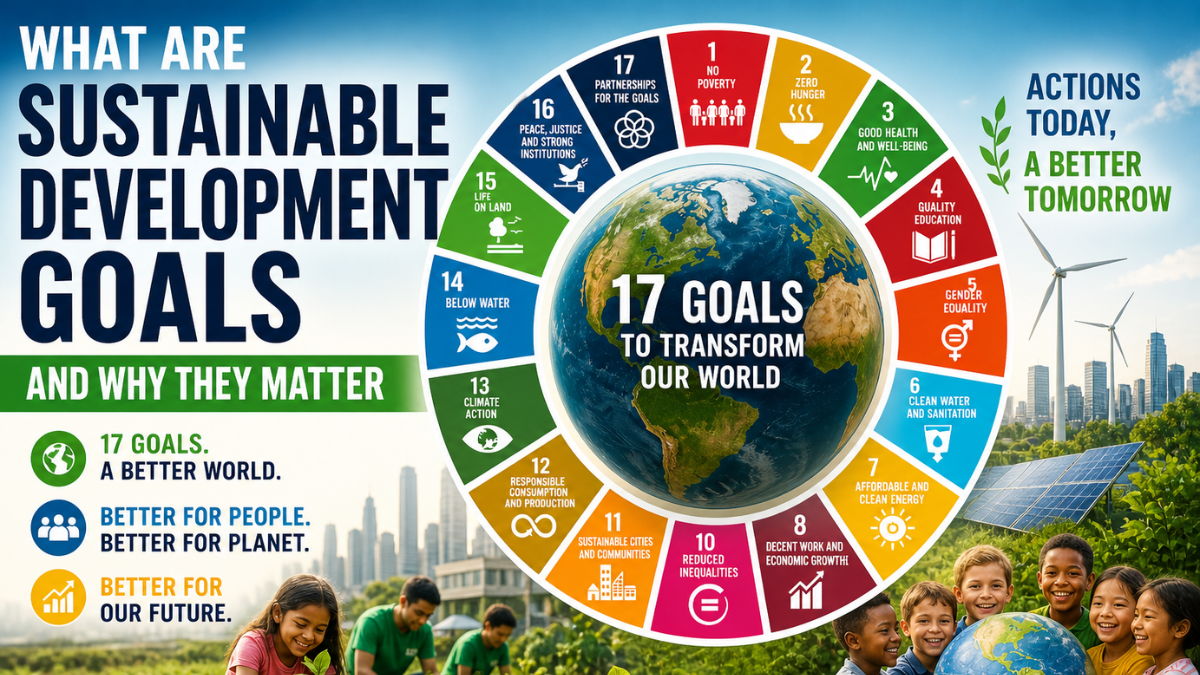
  • What Are Sustainable Development Goals and Why They Matter

    What Are Sustainable Development Goals and Why They Matter

    I remember when I first heard about the Sustainable Development Goals. I thought they sounded important but a bit far away from my everyday life. It seemed like something that was meant for people who make decisions or for large organizations.

    The more I learned about the Sustainable Development Goals, the more I realized that they are actually about things that I encounter every day. They are about education, health, clean water, work and inequality. These are all things that affect my life and the lives of people around me. The Sustainable Development Goals are a way of thinking about these issues that tries to connect them all.

    I think that is what makes the Sustainable Development Goals worth understanding. They help us see how all these different issues are related and how we can work on them together.

    What are the Sustainable Development Goals?

    The Sustainable Development Goals are a set of 17 goals that countries around the world have agreed to work on. These goals are about making the world a better place while also taking care of the environment. The Sustainable Development Goals are supposed to be completed by 2030. The ideas behind them will keep going on.

    The Sustainable Development Goals cover a lot of areas like ending poverty improving education and making sure everyone has access to clean energy. They also talk about promoting equality and building communities. It is a list but that is because all these issues are important.

    Why are there many Sustainable Development Goals?

    At first it might seem like there are many goals.. The truth is, all these issues are connected. For example if we improve education that can help people get jobs and have more economic opportunities. If we have access to water that can help us stay healthy.. If we have economic growth that can affect the environment.

    We cannot just work on one issue at a time because they are all related. The Sustainable Development Goals try to look at all these issues and find ways to make progress on all of them.

    It is not always easy to think about problems in this way. It is a more realistic way of looking at things.

    How do we turn the Sustainable Development Goals into action?

    Having goals is one thing. Actually doing something about them is another. The Sustainable Development Goals are not like rules that we have to follow. More like a guide. Governments organizations, businesses and communities use the Sustainable Development Goals to help make decisions and measure progress.

    Some projects are very big, like policies or international collaborations. Others are much smaller, like projects or individual choices. What is important is that we are all working together towards the goals.

    Why do the Sustainable Development Goals matter in my life?

    It is easy to think of the Sustainable Development Goals as some big abstract ideas.. They actually affect my life every day. The quality of education in my school the healthcare services I can use, the clean drinking water I have access to and the opportunities I have for fair and stable work. All these things are part of the bigger picture.

    I do not need to memorize all 17 Sustainable Development Goals to understand how they affect my life. I just need to recognize how all these issues are connected and how they affect me and the people around me.

    How do we measure progress towards the Sustainable Development Goals?

    It is not always easy to measure how well we are doing on the Sustainable Development Goals. Different countries have challenges and it is hard to get accurate data. Some things, like equality or well-being are hard to measure all.

    There are some indicators and reports that try to measure progress. They do not always tell the whole story. That does not mean that measuring progress is not important it just means we have to be careful and look at things in context.

    What can I do to help with the Sustainable Development Goals?

    One question I often ask myself is: what can I, as one person actually do to help?

    The answer is, I can do something. I cannot do everything. I can make choices in my life that align with the Sustainable Development Goals. I can try to be more aware of the issues and make changes over time.

    Sometimes that means being more careful about what I buy or how I use resources. Sometimes it means getting involved in my community or supporting organizations that are working on these issues.

    There are challenges that we cannot ignore.

    The Sustainable Development Goals are ambitious. That means they are not always easy to achieve. There are resources, political differences, economic pressures and environmental uncertainties that can all make it harder to make progress.

    That does not mean we should give up. It just means we have to be realistic and work together to overcome these challenges.

    The Sustainable Development Goals are not a plan.

    They do not have all the answers. They do not tell us exactly what to do in every situation.. They do give us a direction, a way of thinking about development that tries to balance social, economic and environmental needs.

    That balance is not always easy to achieve. It is necessary.. Even though the Sustainable Development Goals are not perfect they are still important.

    Looking at the picture.

    The more I learn about the Sustainable Development Goals, the more I start to see connections between things. I see how policies and people are connected, how local actions can affect outcomes.

    It is not always clear. It is interesting.. Sometimes just having that context is what makes me want to do something more.

    Why the Sustainable Development Goals still matter.

    With all the complexity the Sustainable Development Goals are still relevant. They remind us that development is not about growth it is about sustainability, fairness and long-term impact.

    Even though progress may be uneven the Sustainable Development Goals give us a shared language. They give us a way to talk about these issues and work together towards something that we all care about. The Sustainable Development Goals are, about the Sustainable Development Goals. How they can help us make the world a better place.

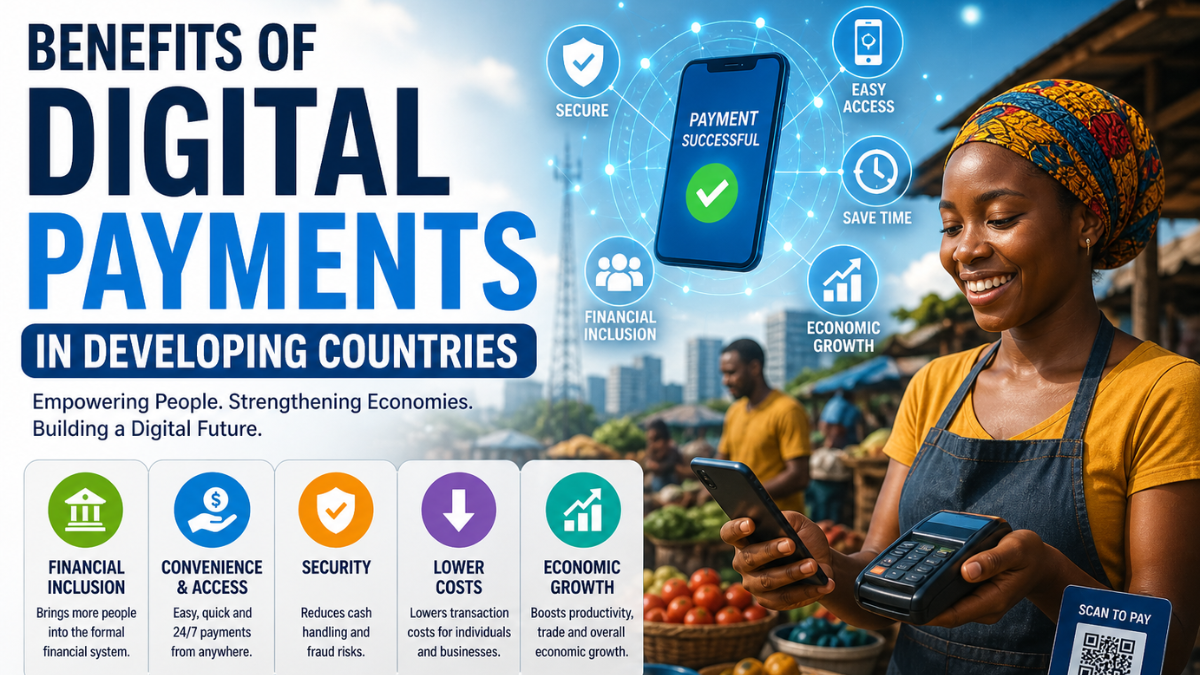
  • Benefits of Digital Payments in Developing Countries

    Benefits of Digital Payments in Developing Countries

    I remember the time I saw someone pay with just a phone in a small roadside shop. No cards, no cash— a quick scan and it was done. It felt simple, almost ordinary. But the more I thought about payments the more I realized how much had to change for that moment to become possible.

    In developing countries digital payments aren’t just about convenience. They’re quietly reshaping how people earn, spend, save and even trust payment systems.

    Expanding Access to Financial Services

    One of the shifts digital payments bring is access to financial services. Traditional banking isn’t always easy to reach. Branches may be away paperwork can be complicated and for many people opening a bank account just isn’t practical.

    Digital payment systems change that. With a phone people can send and receive money, store value and participate in the financial system without needing a physical bank nearby. Digital payments make it possible.

    Making Everyday Transactions Easier

    There’s something powerful about making small transactions simpler with digital payments. Paying for groceries, transport, school fees—things that happen daily—becomes faster and more predictable. There’s need to carry cash less worry about exact change and fewer delays.

    For business owners it also means smoother operations. Payments can be recorded automatically reducing the need for tracking. Digital payments help.

    Supporting Businesses and Informal Economies

    In many developing countries a large part of the economy operates informally. Street vendors, local artisans, service providers—these businesses often rely on cash. While that works it can limit growth and visibility.

    Digital payments offer another option. They make it easier to track income build transaction history and even access microloans or financial services that depend on recorded payment activity.

    Increasing Safety and Reducing Risk

    Handling cash comes with risks—loss, theft and sometimes even disputes. Digital payments reduce the need to carry amounts of physical money. Transactions are recorded, which can help resolve issues easily.

    Improving Transparency and Accountability

    When transactions are recorded digitally they create a trail. This can be useful not for individuals but also for governments and organizations. It becomes easier to track how money moves, whether its for salaries aid distribution or public services.

    Enabling Faster Transfers and Remittances

    For families especially those with members working in different regions or countries sending money is a regular need. Traditional transfer methods can be slow and expensive.

    Digital payments make this process quicker and more affordable. Money can be sent instantly reaching people when they need it most. Digital payments help with that.

    Encouraging Financial Awareness

    Something obvious, but equally important is how digital payments influence financial habits. When transactions are recorded people can see where their money goes. Even simple transaction histories can create an understanding of spending patterns.

    The Challenges That Still Exist

    course the shift to digital payments isn’t without its challenges. Access to smartphones and reliable internet isn’t universal. Digital literacy varies widely. Security concerns, like fraud or data misuse still need attention.

    A Gradual Change in Life

    Whats interesting about digital payments is how quietly they integrate into daily routines. There’s no shift. Just small changes—one payment transaction at a time.

    A vendor accepting payments. A worker sending money home instantly. A customer choosing to pay instead of with cash. Over time those small moments begin to redefine how money moves with payments.

    Looking at Progress in a Way

    It’s easy to think of digital payments as just another technological upgrade.. In developing countries they represent something more practical—greater access, smoother transactions and a bit more control over financial life with digital payments.

    Not perfectly. Not universally.. Meaningfully.. Sometimes that kind of steady grounded progress is what makes the biggest difference, with digital payments.

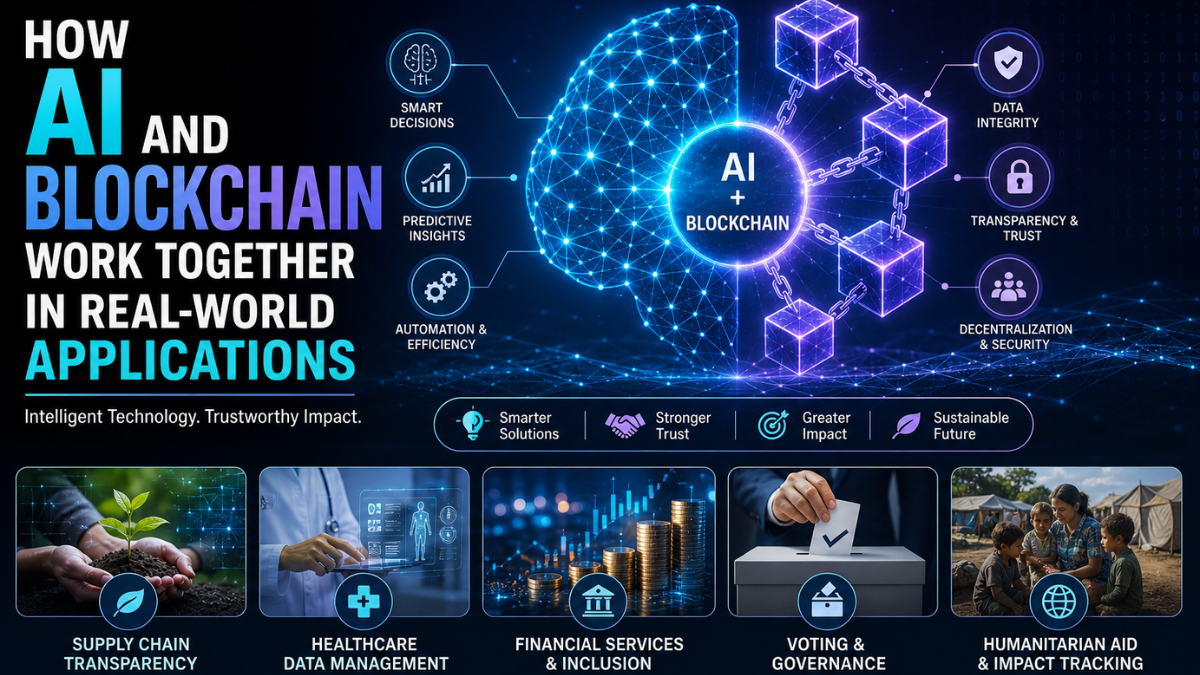
  • How AI and Blockchain Work Together in Real-World Applications

    How AI and Blockchain Work Together in Real-World Applications

    For a while I thought of AI and blockchain as two separate things.

    AI felt like something that can learn and adapt making sense of patterns. Blockchain on the hand seemed rigid and structured focused on records and transactions.

    But the more I looked into it the more I noticed them showing up together. Not in a way but in practical situations where both flexibility and trust are needed.

    That combination turns out to be more useful than I thought.

    Why These Two Technologies Work Well Together

    At a level AI and blockchain solve different problems.

    AI helps make sense of data. It looks for patterns. Makes predictions.. It needs good data to work well.

    Blockchain focuses on keeping data safe and honest. It records information in a way thats transparent and hard to change.

    Put them together. Something interesting happens.

    AI can work with data thats more reliable. Blockchain gains a way to make that data more useful. One adds intelligence the other adds trust.

    Making Data More Reliable for AI

    One of the challenges with AI is that it learns from the data it gets. If that data is bad the results are bad.

    Blockchain helps by creating a system where data can be checked.

    In real-world applications this might mean recording transactions or sensor readings in a way before they’re used for analysis. AI can then process that data with confidence.

    It doesn’t eliminate errors. It reduces uncertainty.

    Improving Transparency in Decision-Making

    AI systems can sometimes feel like boxes. They produce results. Its not always clear how.

    Blockchain can add a layer of transparency.

    By recording steps or decisions it becomes easier to see how certain outcomes were generated. This is especially important in areas like finance or healthcare.

    It doesn’t make AI fully explainable. It creates a clearer trail.

    Real-World Example: Smarter Supply Chains

    Supply chains are an example of where this combination is already being used.

    Blockchain can track products as they move creating a record. AI can then analyze that data to identify inefficiencies or predict delays.

    Together they help businesses understand where things are and improve how they move.

    It’s an application, not just about innovation for its own sake.

    Supporting Financial Systems and Transactions

    In systems both trust and speed matter.

    Blockchain enables transactions without relying on multiple intermediaries. AI can monitor these transactions. Detect unusual patterns.

    For example AI might flag a transaction that doesn’t fit behavior while blockchain ensures that the transaction history itself is accurate.

    It’s an approach, with security and analysis working together.

    Enhancing Healthcare Data Management

    Healthcare is another area where this combination shows potential.

    Patient records and medical data can be stored securely using blockchain. AI can then analyze this information to support diagnosis or predict outcomes.

    The key challenge here is privacy and blockchains controlled access systems can help manage who sees what.

    Again it’s not a solution but it offers a more structured way to handle sensitive information.

    Challenges That Still Need Attention

    As promising as this combination is it’s not without complications.

    • Integrating two technologies takes time
    • Scalability can be an issue with large datasets
    • There are still questions around regulation and standards

    Perhaps most importantly not every problem requires both AI and blockchain.

    A Practical Way to Look at It

    What stands out is that the real value of AI and blockchain working together isn’t in theory. It’s in application.

    When theres a need for both data and intelligent analysis the combination starts to make sense.

    When that need isn’t there adding both can feel unnecessary.

    It’s less about using technology for the sake of it and more about matching tools to real problems.

    A Gradual Integration Into Everyday Systems

    This isn’t happening at once.

    You won’t always see AI and blockchain labeled clearly in the systems you use.. They’re being integrated gradually into logistics, finance, healthcare and even small business operations.

    Often without attention.

    Maybe that’s how most meaningful technology evolves. Not as a sudden shift but as a series of small practical improvements.

    Looking Ahead Without Overcomplicating It

    It’s easy to get caught up in how advanced these technologiesre

    At their core the idea is simple.

    • Make data more trustworthy
    • Use that data to make decisions

    Everything else builds on that.

    When you look at it that way AI and blockchain working together feels less like a complex concept. And more like a natural step, in how systems are improving over time.

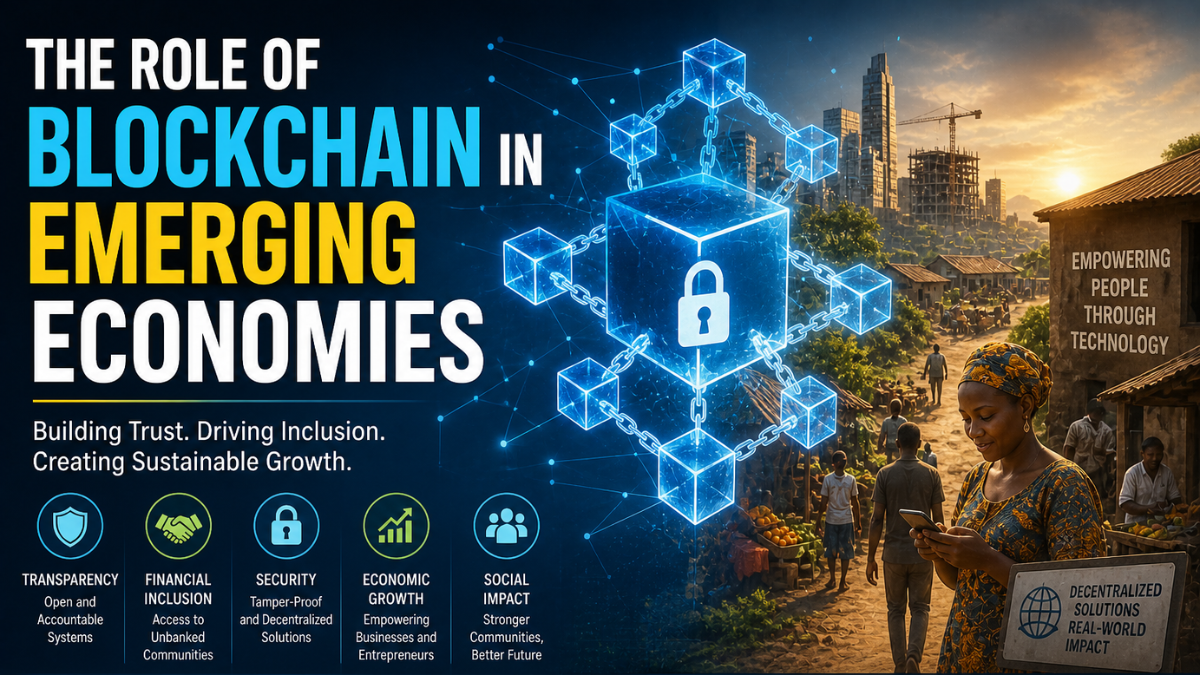
  • Role of Blockchain in Emerging Economies

    Role of Blockchain in Emerging Economies

    The time I heard about blockchain it felt like something that was not really relevant to my everyday life. It seemed like it was only related to finance and maybe even speculation. I did not think it would be used in systems especially in places where resources are already limited.

    Over time I started to change my mind about blockchain.

    In countries that are still developing blockchain is not just a trend. It is being used as a tool to solve problems. This is happening in an experimental way.

    It is not perfect. It does not solve all problems.. It is worth paying attention to.

    Why countries with resources are open to new systems

    In places where traditional systems are already established it is hard to make changes. There are a lot of rules and infrastructure in place.

    Countries with fewer resources are different. They have gaps in their systems. Like not everyone having access to banks or records. These gaps can actually be opportunities for approaches. They do not have to get rid of their systems they can just build new ones alongside them.

    That is where blockchain comes in. It is not meant to replace systems but to add to them.

    Making it easier for people to access money

    One of the common uses of blockchain is in finance.. In countries with fewer resources it is used in a different way.

    A lot of people in these countries do not have access to banks. It is hard for them to open an account or send money to places.

    Blockchain-based systems give them another option. They can. Receive payments directly without needing a middleman. This can save them time and money.

    It is not a solution that works for everyone. It gives people more options.

    Making systems more transparent

    It is often hard to know what is going on in big systems. Like governments or organizations that give out money.

    Blockchain helps by creating a record of all transactions that’s open and honest. Once something is written down it is hard to change it without someone noticing.

    This can help track how money is being used and where it is going. It can also help find problems or inconsistencies.

    It does not mean that people do not need to oversee things. It makes it easier to see what is going on.

    Making supply chains more transparent

    In countries with fewer resources supply chains are complicated.

    Products can go through hands before they get to the final customer. It can be hard to know where they came from.

    Blockchain can help by creating a record of where products come from.

    From farming to making clothes each step can be recorded. This helps businesses manage their operations. It helps customers know where their products come from.

    For producers this can help them get their products to more people.

    Helping people prove who they are

    Another area where blockchain is being used is in identity.

    In some places it is hard for people to prove who they are because they do not have the documents.

    Blockchain-based identity systems are trying to create trustworthy digital records that people can control.

    It is still an idea but it is simple: giving people a reliable way to prove who they are.

    The challenges that come with blockchain

    It is easy to think that blockchain is a solution but it is not that simple.

    Not everyone has access to the technology they need.

    Internet connections can be unreliable.

    It takes time for people to understand and trust systems.

    There are also concerns about rules and regulations and how blockchain can be used in a way that’s good for the environment.

    In words blockchain is still being developed and it is not perfect.

    A gradual change, not an one

    What is interesting is that blockchain is not being adopted all at once.

    It is happening gradually with projects and experiments.

    Some of these projects work well. Others do not.

    Over time people are learning from these efforts and figuring out what works and what does not.

    That slow process is what makes the change last.

    Looking at technology in a way

    In countries with fewer resources technology is not just about what is new and exciting.

    It is about what’s useful and what solves real problems.

    Does it make something easier or faster?

    Can people actually use it?

    Blockchain is one of many tools being tested to see if it is useful.

    Sometimes it. Sometimes it does not.

    A different way to think about innovation

    What is interesting is not the technology itself but how it is being used.

    Innovation is not always about creating something new.

    It is about taking something and adapting it to fit the needs of people.

    It is about working with what you have and finding solutions that’re practical.

    That approach tends to create solutions that are realistic and workable.

    A quiet transformation

    The role of blockchain in countries with resources is not always visible.

    There are not always announcements or sudden changes.

    Over time small changes start to add up.

    People have access, to money records are clearer and supply chains are more transparent.

    It is not a revolution. A gradual transformation that is still happening.

  • How Technology is Improving Transparency in NGOs

    How Technology is Improving Transparency in NGOs

    For a time people trusted non-governmental organizations almost without thinking. If an organization was doing work you believed in it and supported it. That was it.

    Over time people started to wonder more. They want to know not what an NGO says its doing but whats really happening behind the scenes.

    This change isn’t bad. Its making organizations more open and accountable.. Technology is helping make that happen.

    Why Transparency Matters More Than Ever

    Transparency is about sharing information in a way that makes sense and is easy to understand. When people donate, volunteer or support a cause they’re investing more than money. They’re investing their trust.. They want to see how that trust turns into action.

    Without transparency even good work can feel away or unclear. With it there’s a sense of connection. Of understanding where efforts are going and what they’re achieving.

    Digital Tools Making Information Visible

    One way technology has improved transparency is by making information easy to see.

    • Websites, dashboards and online reports let NGOs share updates away.
    • Supporters can now see progress as it happens. Projects started funds used outcomes achieved.

    It’s not just about having information. It’s about making that information easy to find and understand.

    When data is easy to access it builds trust.

    Tracking Funds With Greater Clarity

    people wonder about money.

    • Donors want to know: where does the funding go?
    • How much reaches the project?
    • Whats used for operations?

    Technology helps answer these questions clearly.

    Digital financial systems, transparent reporting platforms and blockchain-based tools let NGOs track and share how funds are allocated. Each transaction can be recorded organized. Presented in a way thats easy to follow.

    Real-Time Project Monitoring

    Another change is happening in how projectsre monitored.

    With apps, cloud systems and data collection tools field workers can upload updates right from the field. Photos reports and progress data can be shared instantly.

    This reduces the gap between action and reporting.

    Of relying only on summaries stakeholders can get a closer more immediate view of whats happening.

    Using Data to Tell a Clearer Story

    Numbers don’t always show impact.. When used thoughtfully they can add clarity.

    Technology lets NGOs collect and analyze data effectively. Tracking outcomes identifying trends and measuring progress over time.

    This data can then be shared through formats like charts, maps or dashboards making it easier for people to understand.

    Opening Communication Channels

    Transparency is also about listening.

    Social media, email platforms and online communities have created direct ways for NGOs to interact with supporters. Questions can be asked feedback can be shared and conversations can happen in time.

    The Challenges That Still Exist

    Technology doesn’t solve everything.

    • Not all regions have access to digital tools
    • Data can still be incomplete or difficult to verify
    • Much information can sometimes feel overwhelming

    A Shift Toward More Open Systems

    Whats interesting is that transparency isn’t just becoming a feature. Its becoming an expectation.

    People assume that information should be available. That updates should be timely. That systems should be clear.

    Technology is helping meet those expectations. Its also raising the standard.

    NGOs are no longer just evaluated on their intentions. On how clearly they show their work.

    Looking at Trust a Little

    Trust hasn’t disappeared. Its just changed.

    Of being automatic its becoming something thats built through visibility, consistency and openness.

    Technology plays a role in that.. Its still up to people to use it thoughtfully.

    At its best it doesn’t just make NGOs more transparent. It makes them more connected. To their work to their supporters and, to the communities they serve.

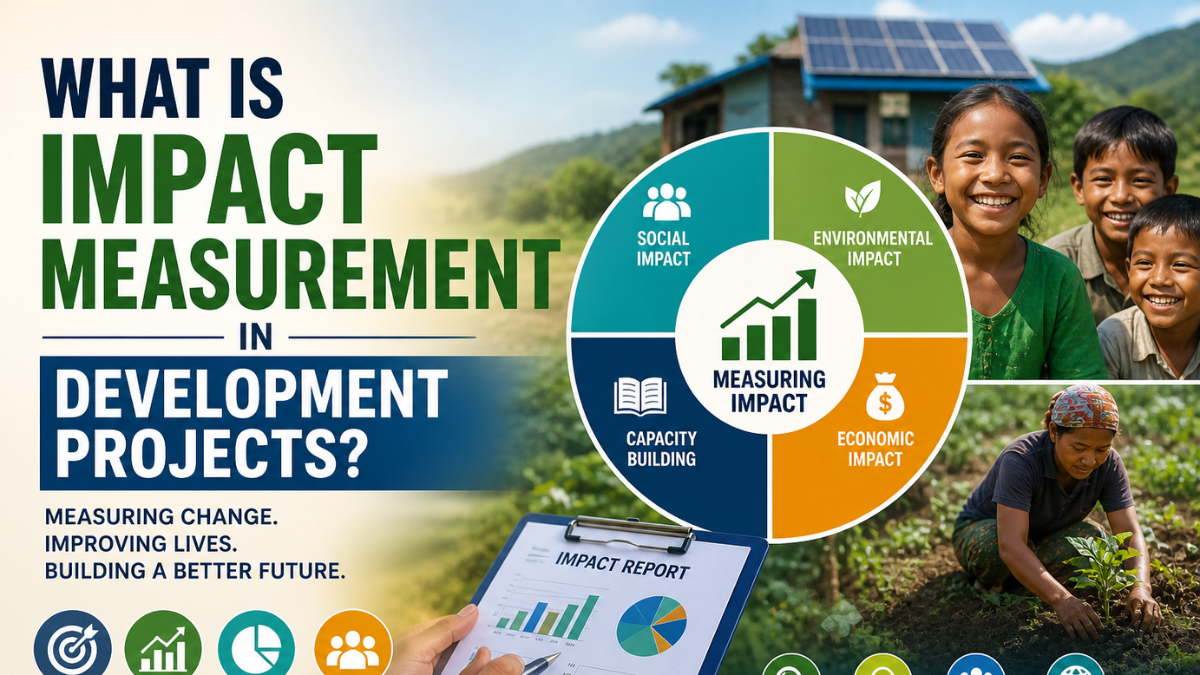
  • What is Impact Measurement in Development Projects

    What is Impact Measurement in Development Projects

    For a time I thought development projects were easy to figure out. You do something you help people they get better. That is the result. It seems simple.

    The more I thought about it the more I realized that what seems like a success and what really is a success are not the same thing. That is where measuring the impact of development projects comes in. Not as something people say but as a way to ask a deeper question: did this project really make a big difference in peoples lives?

    Measuring the impact of development projects is an thoughtful process. It is also complicated.

    Understanding what “impact” really means is important. At first it might seem obvious. You build schools you help more people you give out more resources.

    The impact of development projects is not just about numbers. It is about change. Change that lasts in peoples lives. Did the new school really help kids learn more? Did the healthcare project really make people healthier in the run? Did the job training program really help people get jobs?

    Measuring the impact of development projects tries to look beyond what you can see now and focus on what happens later. It looks at the long-term effects.

    Measuring the impact of development projects is not easy. If it were every project would do it perfectly.. It does not work that way.

    Peoples lives are complicated. Things change. Other things happen that can affect the results in ways that’re hard to understand.

    So when a project helps people it is not always clear how much of that help came from the project itself.

    That does not make measuring the impact of development projects less important. It just makes it more careful.

    The difference between what you can see now and what happens later is important. It is easy to get confused.

    What you can see now is like this:

    • Number of workshops
    • Number of people trained
    • Number of things given out

    What happens later is like this:

    • Did people really use what they learned?
    • Did their lives get better?
    • Did the change last?

    Measuring the impact of development projects goes one step further. It looks at the picture and the long-term change.

    It is a change from counting what you do to understanding what really happens.

    There are ways to measure the impact of development projects. Different projects use methods depending on what they want to do.

    Some projects use surveys and interviews to understand how people feel. Others use numbers and data to track what happens over time. Sometimes projects compare groups to see what changes.

    Now digital tools and data systems are helping projects collect and understand information better.

    Even with all these methods it is important to think carefully about what the numbers mean. Numbers do not explain themselves.

    Using numbers and stories together is a way to understand the impact of development projects. You can count how many people were in a program. That does not always show how it really affected them.

    Sometimes the biggest impact is in things that’re hard to measure. Like feeling confident, stable or having a sense of direction.

    That is why many organizations use both numbers and stories. Not to replace measuring. To make it deeper.

    Measuring the impact of development projects is not easy. There are challenges.

    Collecting data can be hard in places that are far away or do not have many resources.

    Tracking what happens over time takes a lot of time and effort.

    Results may not be clear away.

    Different people may think about success in ways.

    These challenges do not make measuring the impact of development projects less valuable. They just remind us that it is about learning and getting better.

    Measuring the impact of development projects matters because it helps organizations understand what is working and what is not. It helps them make changes and get better.

    In a field where resources are limited and needs are high understanding what really works is important.

    What I like about measuring the impact of development projects is that it changes how we think.

    Of asking, “Did we do enough?” it asks, “Did it really help?”

    That is a question. It is slower. It is more meaningful.

    It moves the focus from what we do to what happens.

    Measuring the impact of development projects is not about getting answers. It is about asking questions.

    Questions that go beyond what you can see now.

    Questions that think about the long-term change.

    Questions that are open, to learning.

    Maybe that is what makes it valuable. Not that it makes development projects easier but that it helps us understand them more honestly.

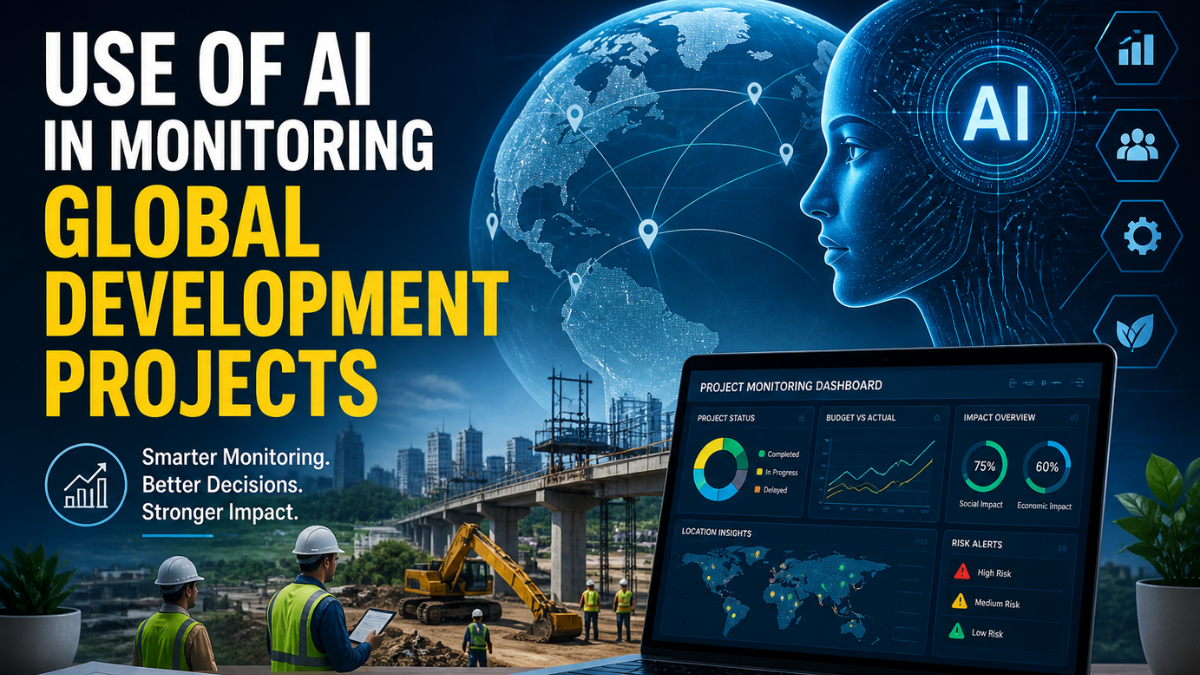
  • Use of AI in Monitoring Global Development Projects

    Use of AI in Monitoring Global Development Projects

    I used to think of development projects as something that happens far away. These are efforts that are handled by organizations that I do not know. I would hear about them through reports and updates. It all seemed a bit vague.

    The more I learned about global development projects the more I realized how complicated they are. There are different regions and people involved. There are not resources and it is hard to measure the results.. Then there is something that is becoming more important in all of this: artificial intelligence.

    I do not mean intelligence in a futuristic way. I mean it in an practical way. It helps people understand what is really happening on the ground.

    Why Monitoring Matters More Than It Seems

    Every global development project needs one thing to work: knowing if it is working. This can be a project about education, healthcare or building roads.

    It sounds simple. It is not. Data comes from different places and it is often late or incomplete. Things change in the field. What looks good on paper may not work in life. And if we do not monitor things clearly even projects with a lot of money can go off track.

    This is where artificial intelligence can help. It does not replace people. It helps them understand information better.

    Turning Data Into Something

    There is a lot of data in global development. The problem is making sense of it.

    Artificial intelligence tools can look at a lot of information quickly. This can be pictures from satellites answers from surveys or data from sensors. Artificial intelligence can find patterns that would take weeks to notice.

    For example we can use intelligence to track changes in how land is used the health of crops or the development of roads. This is not meant to replace visits to the field. To add another way of seeing what is happening.

    Sometimes this extra way of seeing things is what shows us what is really going on.

    Real-Time Insights of Delayed Reports

    One of the problems with traditional monitoring is that it takes time.

    By the time a report is finished reviewed and shared things on the ground may have already changed. This means that decisions are made after the fact than when they are needed.

    Artificial intelligence can help with this.

    With artificial intelligence organizations can get data in time. This means they can spot problems earlier such as delays or unexpected results. Artificial intelligence does not fix the problem on its own. It helps us react faster.

    Improving Transparency and Accountability

    There is always a question about development work: how do we know that resources are being used well?

    Artificial intelligence can help make tracking systems more transparent. Data from sources can be checked patterns can be verified and inconsistencies can be found.

    This does not mean that we do not need people to oversee things. It adds an extra layer of checks.

    For donors, stakeholders and communities this kind of visibility builds trust.

    Supporting Decision-Making in Complex Environments

    Global development projects are rarely simple.

    Things change. Economically socially and environmentally. What works in one place may not work in another. Decisions need to be made

    Artificial intelligence can help by giving us predictions. Based on data it can show us what might happen or what risks there are. This is not meant to tell us what to do. To give us informed suggestions.

    It is still up to people to make decisions.. With better information those decisions are better.

    The Limitations That Still Exist

    It is easy to think that artificial intelligence can solve everything. It cannot.

    Data quality is still a problem. If the data we put in is incomplete or biased the results will be too. Not everyone has access to the technology in the places where global development projects are most needed.. There is always the question of how the tools are used and by whom.

    Artificial intelligence is only as good as the systems and intentions behind it.

    A Tool That Works Best Alongside People

    What is clear is that artificial intelligence works best when it helps people not replaces them.

    Field workers, local communities and project managers all bring knowledge that artificial intelligence cannot. Artificial intelligence adds speed and scale. People give meaning.

    In something as complicated as global development we need both.

    A Subtle Shift in How Projects Are Managed

    The role of intelligence in monitoring is not always visible.

    • It makes a difference.
    • We get insights faster
    • We track things better
    • We make informed decisions

    Over time these small changes add up and change how projects are managed.

    Looking Ahead Without Overcomplicating It

    You do not need to understand the side of artificial intelligence to see its impact.

    At its simplest it is about making information clearer, faster and more useful.

    In global development. Where the results affect real people. That clarity matters.

    Not in a dramatic way. Just, in improvements that make things work a little better.